0


Your Cart


Product title goes here
$19.95
Thank you! Your submission has been received!
Oops! Something went wrong while submitting the form.
No items found.
A classroom study of Japan became a hands-on cultural experience when students from Cambridge High School traveled to Columbus to explore Japanese culture and create their own Ohara School Ikebana arrangements.
How do you make the study of another country come alive for high school students?
For a group of students from Cambridge High School in Cambridge, Ohio, part of the answer was to get on a bus and experience some of Japanese culture for themselves.
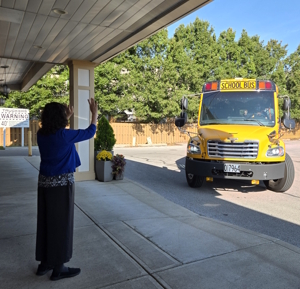
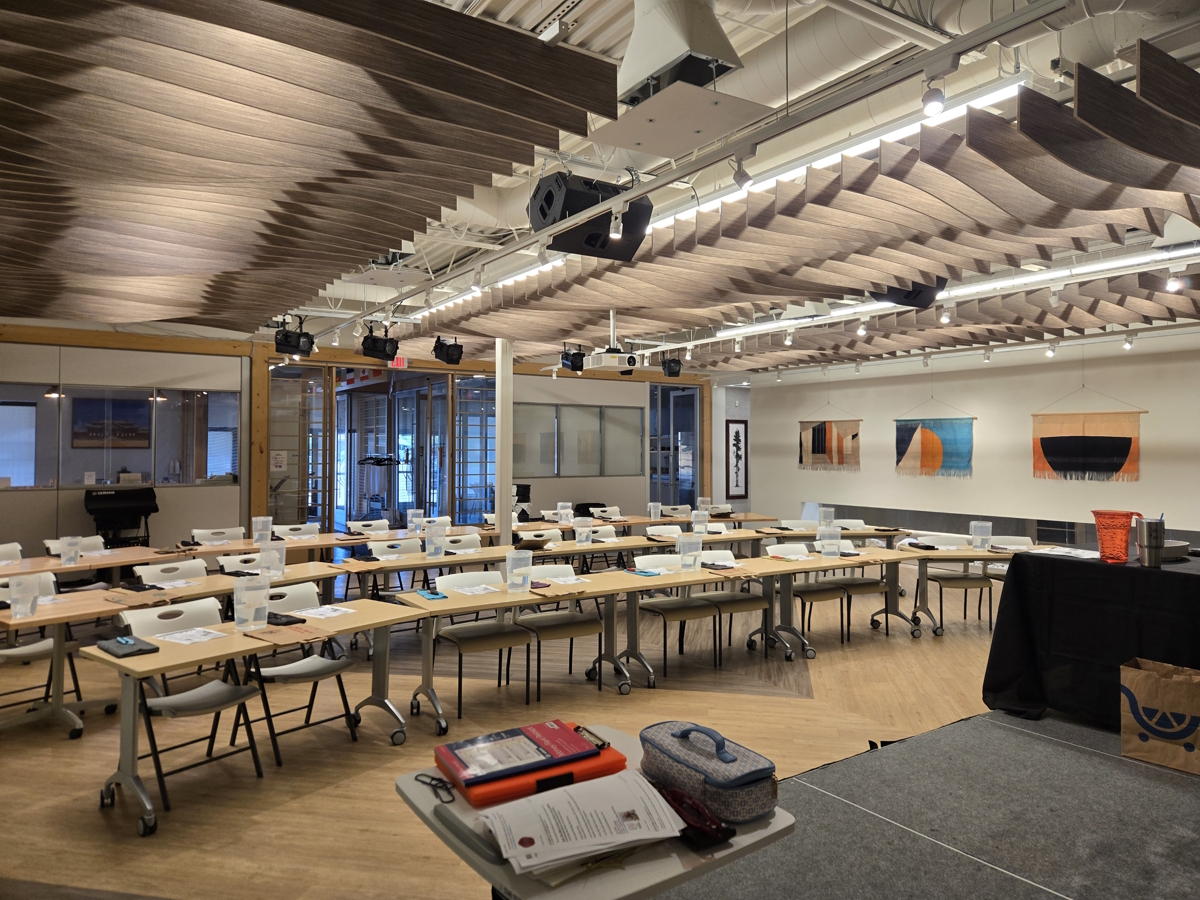
On September 15, students from Cambridge High School traveled to the Yokoso Center in Columbus for a morning that included Japanese culture, food, shopping, and a hands-on introduction to the art of Ikebana.
The visit grew from a conversation with Cambridge High School science teacher Karly Rankin, who had been developing an interdisciplinary unit introducing her students to Japan through science, history, culture, and the arts.
The students' studies covered an impressive range of subjects, including Japan's geography and the Ring of Fire, Japanese traditions and vocabulary, kintsugi and wabi-sabi, the story of Sadako Sasaki, Minamata disease and mercury bioaccumulation, the Fukushima nuclear disaster, and Japanese popular culture. The school's Bobcat Times later described the Columbus excursion as a hands-on culmination of their study of Japan.
At the Yokoso Center, the students participated in an introductory Ohara School of Ikebana workshop taught by Joe Rotella, President of Central Ohio Shibui Ohara Chapter.
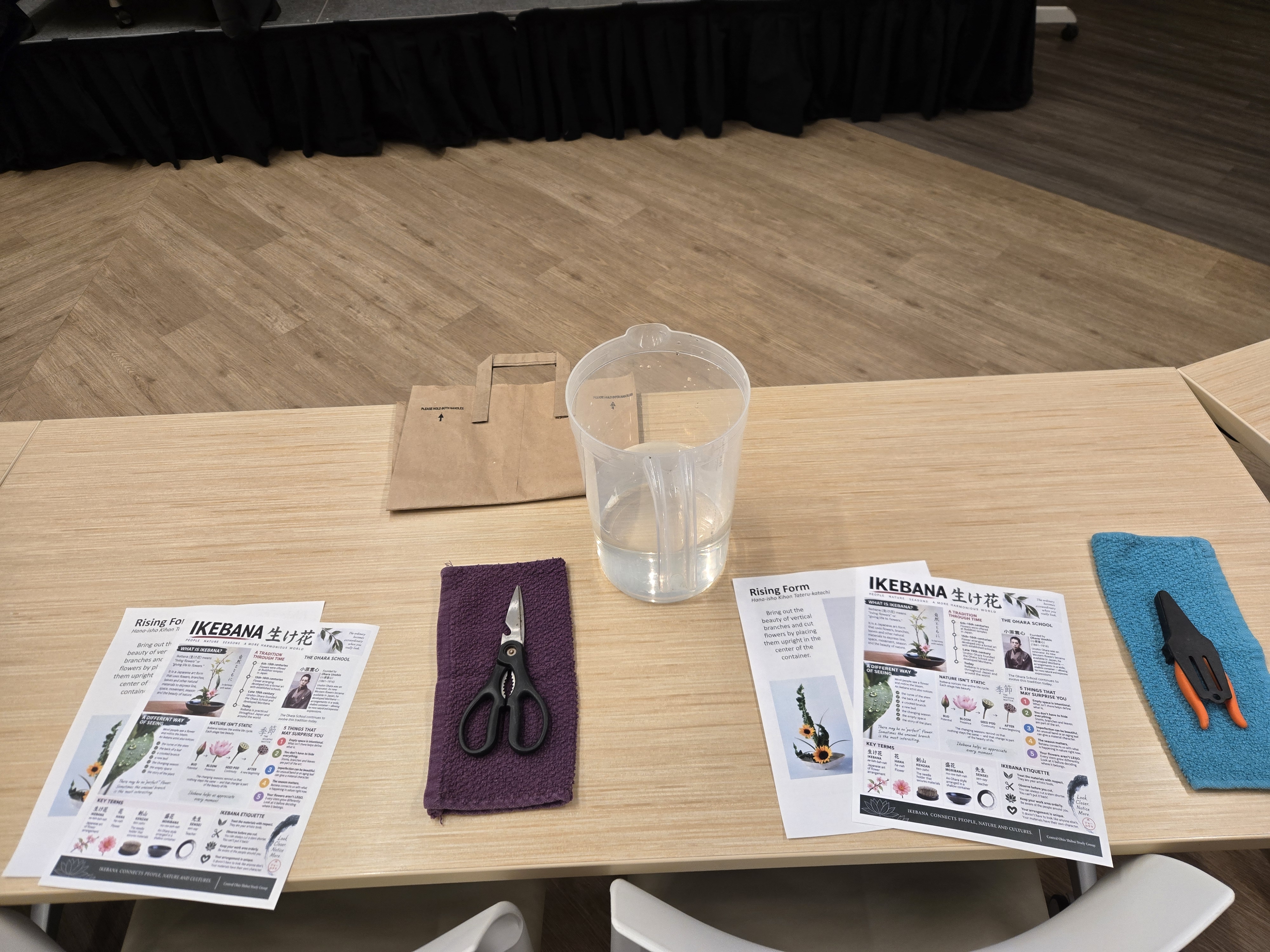
Their lesson was Rising Form, one of the basic Hana-isho forms of the Ohara School.
Before beginning their arrangements, students were introduced to some of the ideas that make Ikebana different from simply arranging flowers. They learned to pay attention to line, space, asymmetry, the individual character of each plant material, and the importance of observing nature.
Then it was time to create.
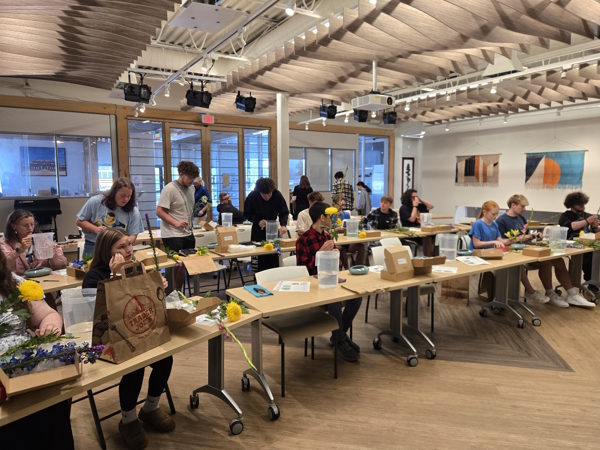
Students selected from an assortment of flowers and greenery and began discovering that even when everyone follows the same basic form, no two Ikebana arrangements are exactly alike.
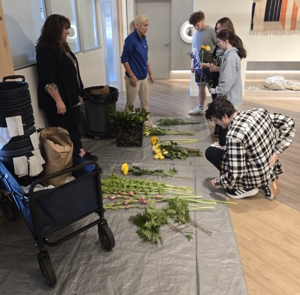
That individuality is part of the experience. A stem bends differently. A flower naturally faces a particular direction. A leaf may be more interesting from the back than the front. Rather than forcing every material to look the same, Ikebana asks us to stop, observe, and consider what each material has to offer.
For students who had been studying concepts such as wabi-sabi, the lesson provided an opportunity to encounter some related Japanese aesthetic ideas through direct experience.
As the workshop progressed, the room quickly filled with color and activity.
Students worked with their flowers, made choices, reconsidered them, trimmed stems, and gradually transformed their materials into individual arrangements.
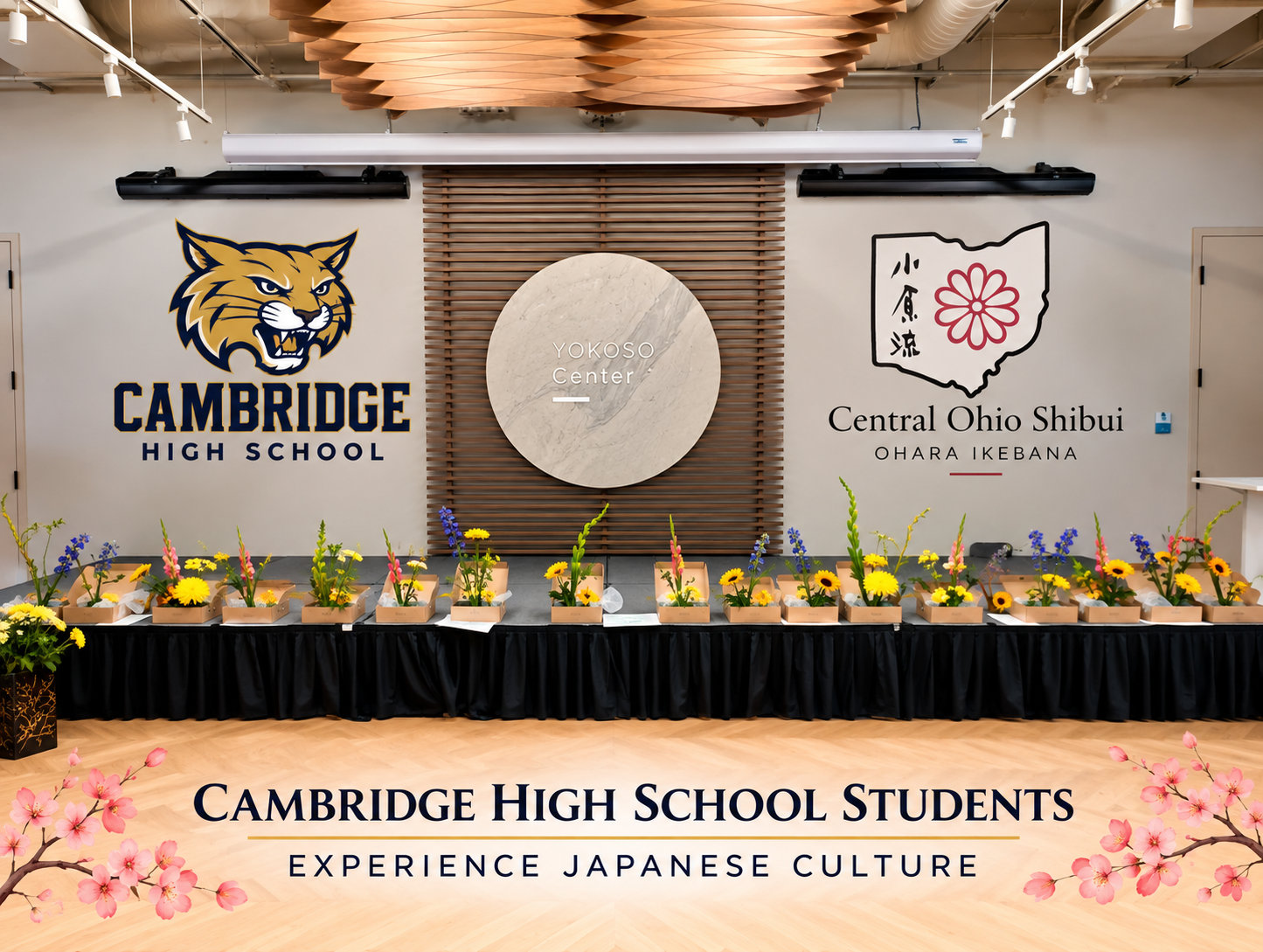
As students finished, their arrangements were gathered on the stage at the Yokoso Center, creating an impromptu exhibition of Rising Form. Seen together, the arrangements made something immediately apparent: everyone had learned the same form, but no two results were alike.
Although they had all received the same lesson, the finished works showed just how differently each student had interpreted the materials.
That is one of the pleasures of teaching Ikebana, especially to people experiencing it for the first time.
“I was so impressed with the students,” Joe Rotella said. “They were incredibly polite, attentive, and engaged, and they seemed genuinely interested in learning about Ikebana and Japanese culture. I hope they enjoyed the experience as much as I enjoyed sharing it with them.”
Cambridge City Schools later included those comments in its own coverage of the visit in the September 30 edition of the Bobcat Times.
The experience didn't end when the last flower was placed.
Students also had an opportunity to explore the Japanese businesses surrounding the Yokoso Center, including the market, bakery, and gift shop, before sitting down to Japanese bento lunches.
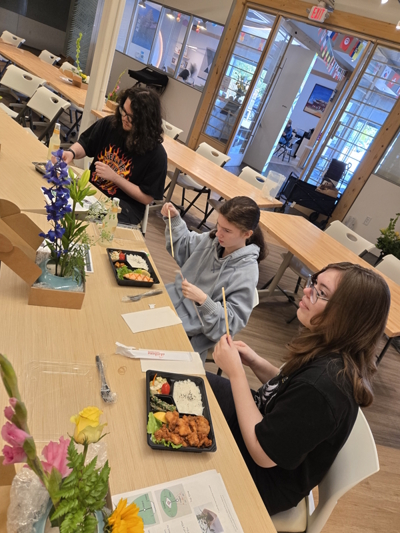
Together, those experiences provided something that can be difficult to recreate in a classroom: an opportunity to encounter another culture through several senses and from several perspectives.
For Central Ohio Shibui Ohara Chapter, programs like this are also an important part of sharing Ikebana with the wider community.
Ikebana can provide an unexpected bridge between art, culture, history, and the natural sciences. Plants are not simply artistic materials. They are living things shaped by growth, season, environment, and change. Learning to observe those characteristics is fundamental to Ikebana and can offer another way of looking closely at the natural world.
We are grateful to Karly Rankin and Cambridge High School for inviting us to become part of their students' exploration of Japan, and to the Yokoso Center for providing such a wonderful setting for the experience.
Most of all, we are grateful to the students who approached something completely new with curiosity and enthusiasm.
Sometimes learning about another culture begins with a textbook.
And sometimes it begins with a flower, a pair of hasami, and the opportunity to create something with your own hands.
Joe Rotella
Associate Second Term Master
Ohara School of Ikebana