0


Your Cart


Product title goes here
$19.95
Thank you! Your submission has been received!
Oops! Something went wrong while submitting the form.
No items found.
Associate Professor Kiyoichi Kamo visited Central Ohio for a week of workshops, harvesting, and a memorable public demonstration. With lotus gathered from OSU’s restored wetlands and water lilies from my garden pond, the evening highlighted the natural spirit of the Ohara School and the strength of our growing community.

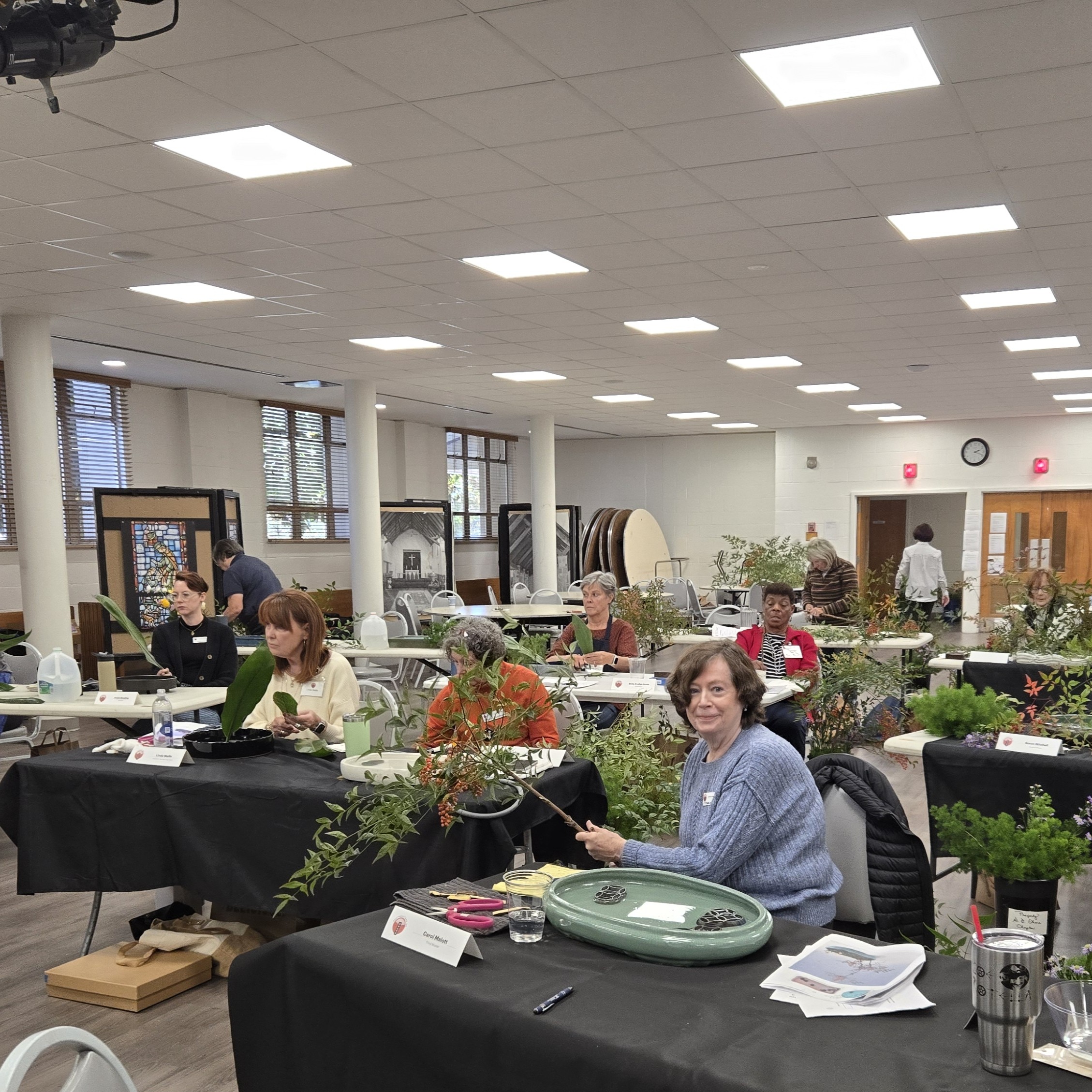
Lotus is not easy to find in Ohio, especially in late summer, yet it became the quiet star of an unforgettable week with Associate Professor Kiyoichi Kamo. He arrived in Columbus on Friday, August 8, taught a workshop the following day, rested on Sunday, led a workshop for the Miami Valley Chapter on Monday, and spent Tuesday and Wednesday preparing for his public demonstration at the Yokoso Center. By Wednesday evening, the room was filled with anticipation. One hundred and twelve people gathered, including representatives from JASCO, the Columbus Museum of Art, the Columbus Bonsai Society, Japan Marketplace, and the Honorary Consul of Japan in Columbus.
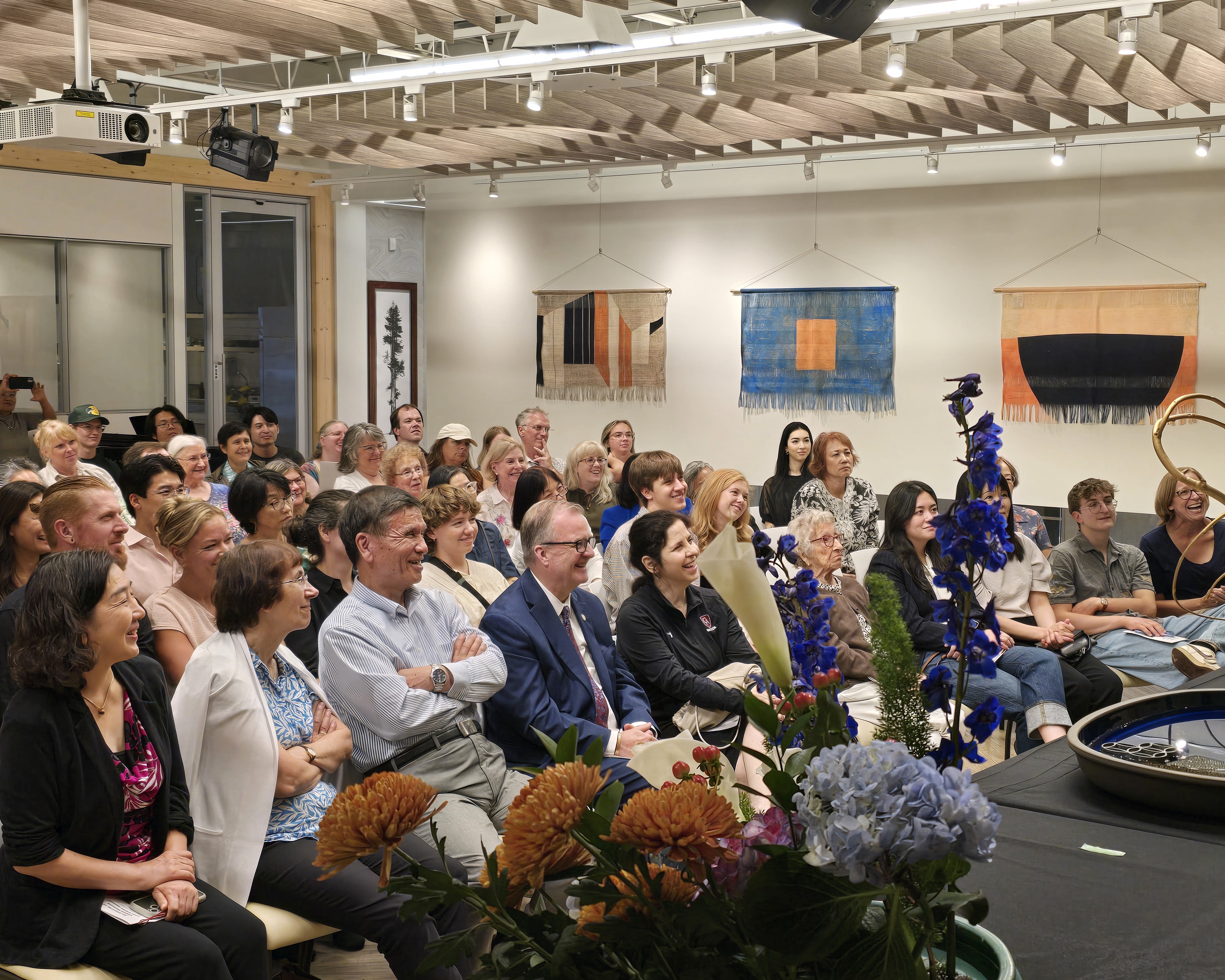
That night’s arrangements were beautiful, but the story behind the materials made the evening even more special.
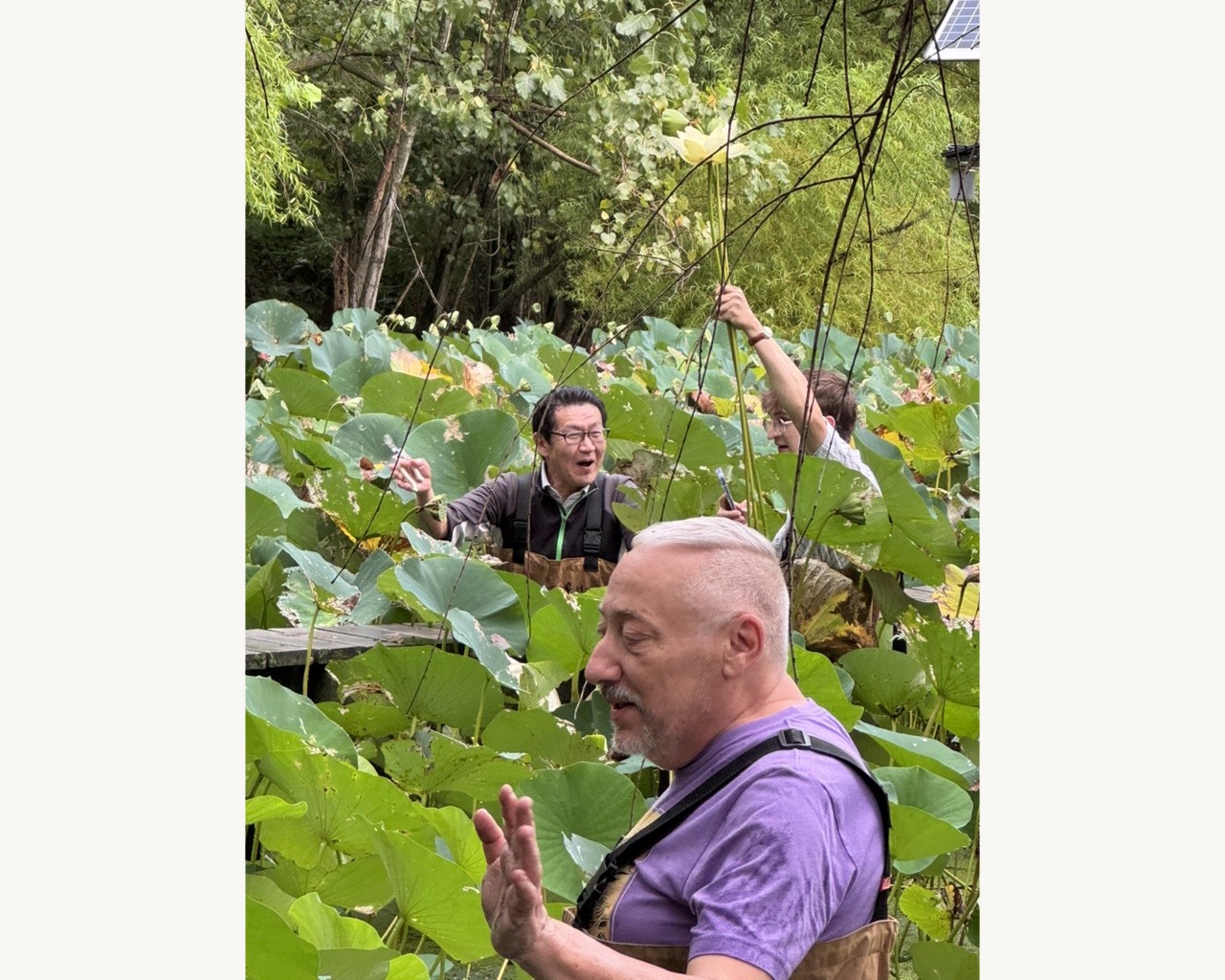
On Wednesday morning, before sunrise, Carol Malot and I met Kamo-sensei at The Ohio State University’s Olentangy River Wetland Research Park. The park is a 52-acre research and teaching facility dedicated to wetland and aquatic ecology. It is a protected ecosystem where harvesting plant material is not permitted under normal circumstances. Thanks to weeks of communication, careful coordination, and approval from the wetland research team, we were granted a rare, supervised opportunity to collect a very small amount of lotus leaves and flowers, along with a few reeds, for the demonstration.

The student researchers met us at the edge of the pond and explained the rules. This was not a free-for-all harvest. It was a guided, respectful collaboration in which we stepped only where directed and collected only what was allowed. The mud was soft and surprisingly deep. Several times the ground held my boots in place as if it had its own opinion about whether I should move. At one point I nearly toppled over, and Kamo-sensei rushed forward, more concerned about the lotus in my hand than my dignity LOL. Carol, safely on shore, captured everything and cheered us on.

The water lilies used in that evening’s arrangements came from my backyard pond, which felt like a small but meaningful contribution to the spirit of the event. After harvesting, we returned to the lab, where Kamo-sensei demonstrated how to condition lotus by filling the stems with water. Watching the leaves strengthen and lift was like watching the materials breathe again.

The demonstration at the Yokoso Center brought all of this to life. Kamo-sensei created six arrangements, each one revealing a different facet of Ohara Ikebana. His Hana-kanade had a lively rhythm. The Shikisai Moribana Yoshiki hon i highlighted the balance of shapes and color. His Heika was clean and uplifting. The Rimpa cho Ikebana carried a feeling of elegance rooted in classical art. Each work felt connected to the season and the materials in a genuine, thoughtful way.

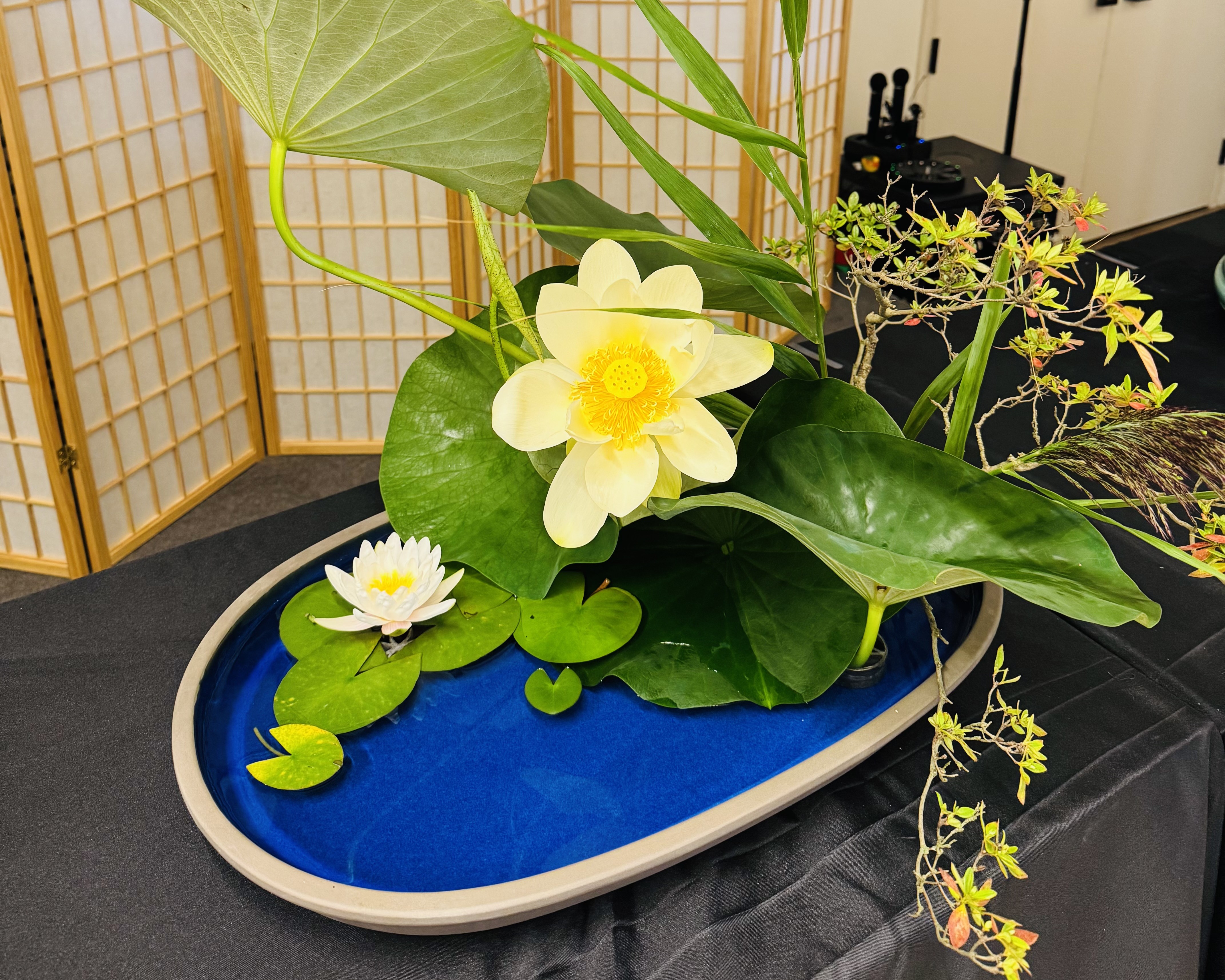
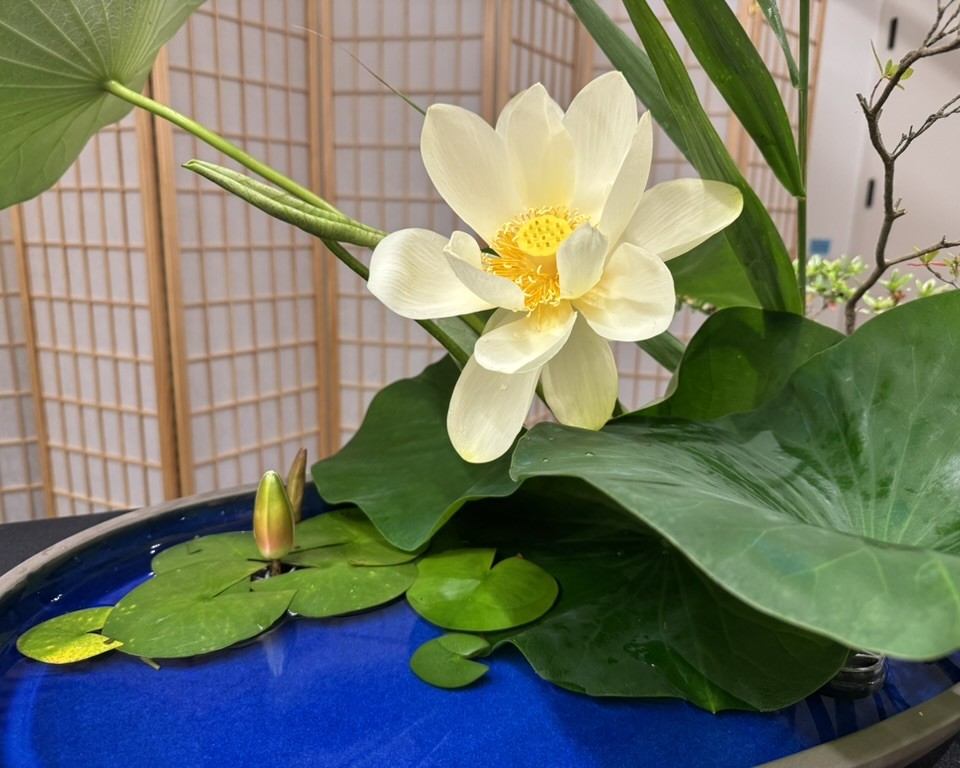
The arrangement that drew the room into a hush was the Shakei Moribana Shizen hon i. Using the lotus and reeds from the wetlands and the water lilies from my pond, he created a landscape that held the spirit of the morning inside it. The wide lotus leaves shaped the horizon of the composition, and the water lilies floated with a softness that reminded me of the quiet surface of the pond. It was the kind of piece that made people lean forward without realizing it.
For our Study Group, still newly recognized by the Ohara School, the entire week felt meaningful. It was an opportunity to learn, to practice, and to welcome an Associate Professor whose kindness, humor, and generosity made every moment feel special. It was also a chance to deepen our relationship with our local community, our cultural partners, and the landscapes around us.
Ohio State later published an article about the visit and the wetlands collaboration: Master of Ikebana Makes Special Visit to Wetlands.
Additional photos and videos from the week can be viewed here: DropEvent.com/Kamo2025
As I look back on that summer evening, what stays with me most is the sense of harmony between nature, art, and community. The collaboration with OSU was rare and deeply meaningful. The demonstration was warm and generous. And seeing lotus bloom in an arrangement here in Columbus felt like a moment I will never forget.



Joe Rotella
Associate Second Term Master
Ohara School of Ikebana