0


Your Cart


Product title goes here
$19.95
Thank you! Your submission has been received!
Oops! Something went wrong while submitting the form.
No items found.
In ikebana, beauty isn't limited to flowers at their peak. A changing leaf, fading blossom, developing seedpod, or weathered branch can reveal something just as important: where we are in the season.
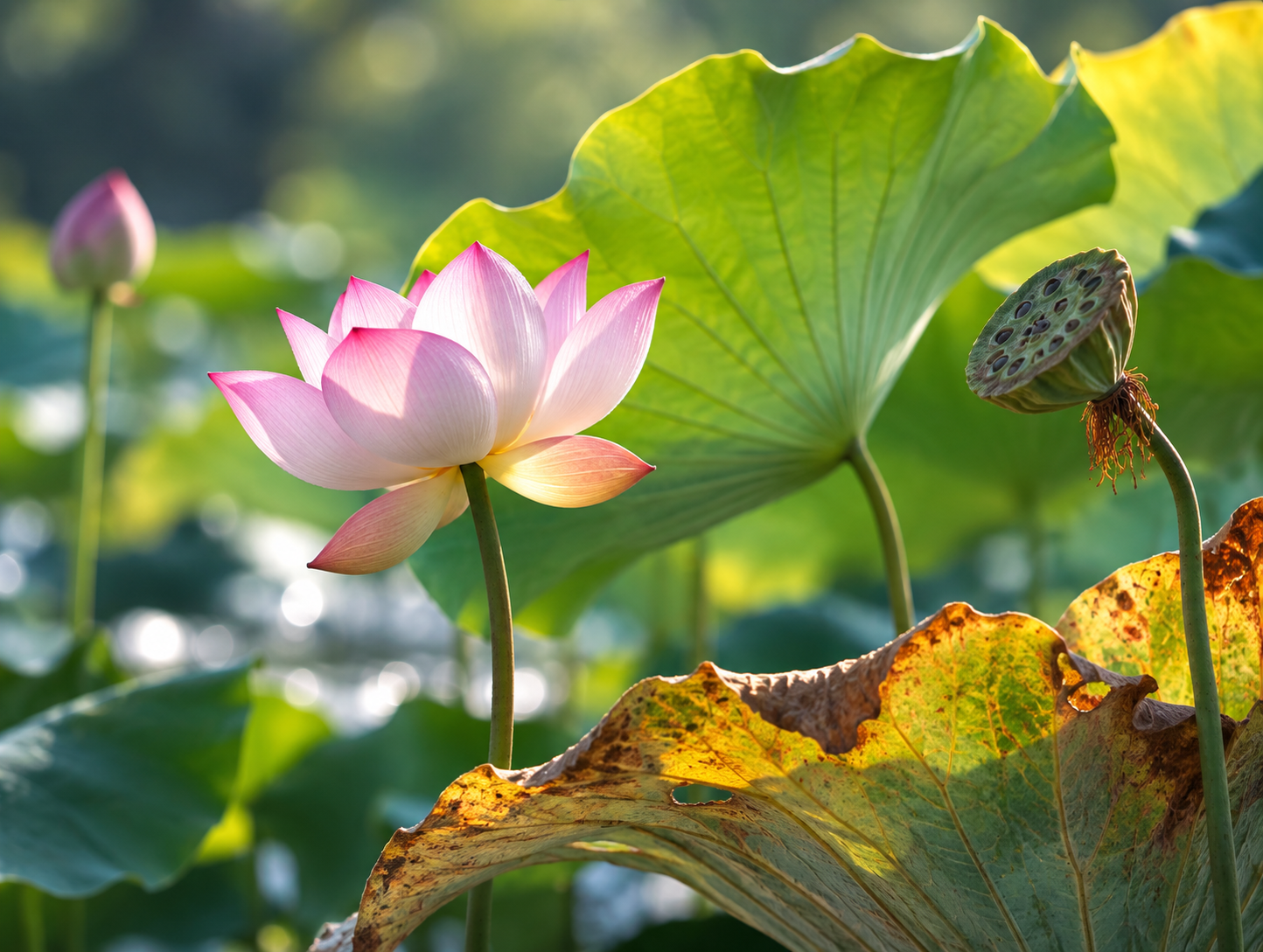
When we buy flowers, we usually look for perfection.
We choose the freshest blossoms, the greenest leaves, and the stems with no blemishes. A flower beginning to fade is removed. A leaf that has started to change color may be discarded. Once the petals fall, we tend to think the flower's moment has passed.
Ikebana invites us to look again.
The most expressive plant material isn't always the one at the height of its beauty. A leaf beginning to turn, a flower past full bloom, a developing seedpod, or a branch bearing the marks of the season can tell us something that a perfect blossom cannot.
They tell us where we are in time.
Ikebana is sometimes described simply as "Japanese flower arranging," but that description misses something important.
The arranger is not only working with flowers, branches, leaves, and grasses as artistic materials. We are observing their individual character and responding to what is happening in nature at a particular moment.
That makes the changing of the seasons especially important.
Late summer is a wonderful example. The landscape hasn't suddenly become autumn. Summer is still very much present. Yet small changes have begun.
Some flowers are fading. Grasses have grown taller and begun to move differently in the wind. Fruits and berries are developing. Greens may be joined by the first touches of warmer color.
Summer and autumn can exist together.
The August 2026 issue of the Ohara School's Sōka magazine explores this transition repeatedly. In one arrangement, Headmaster Hiroki Ohara combines materials that retain the feeling of summer with gentian and Japanese bush clover, flowers associated with the approaching autumn. Rather than choosing one season or the other, the arrangement captures the moment when the two meet.
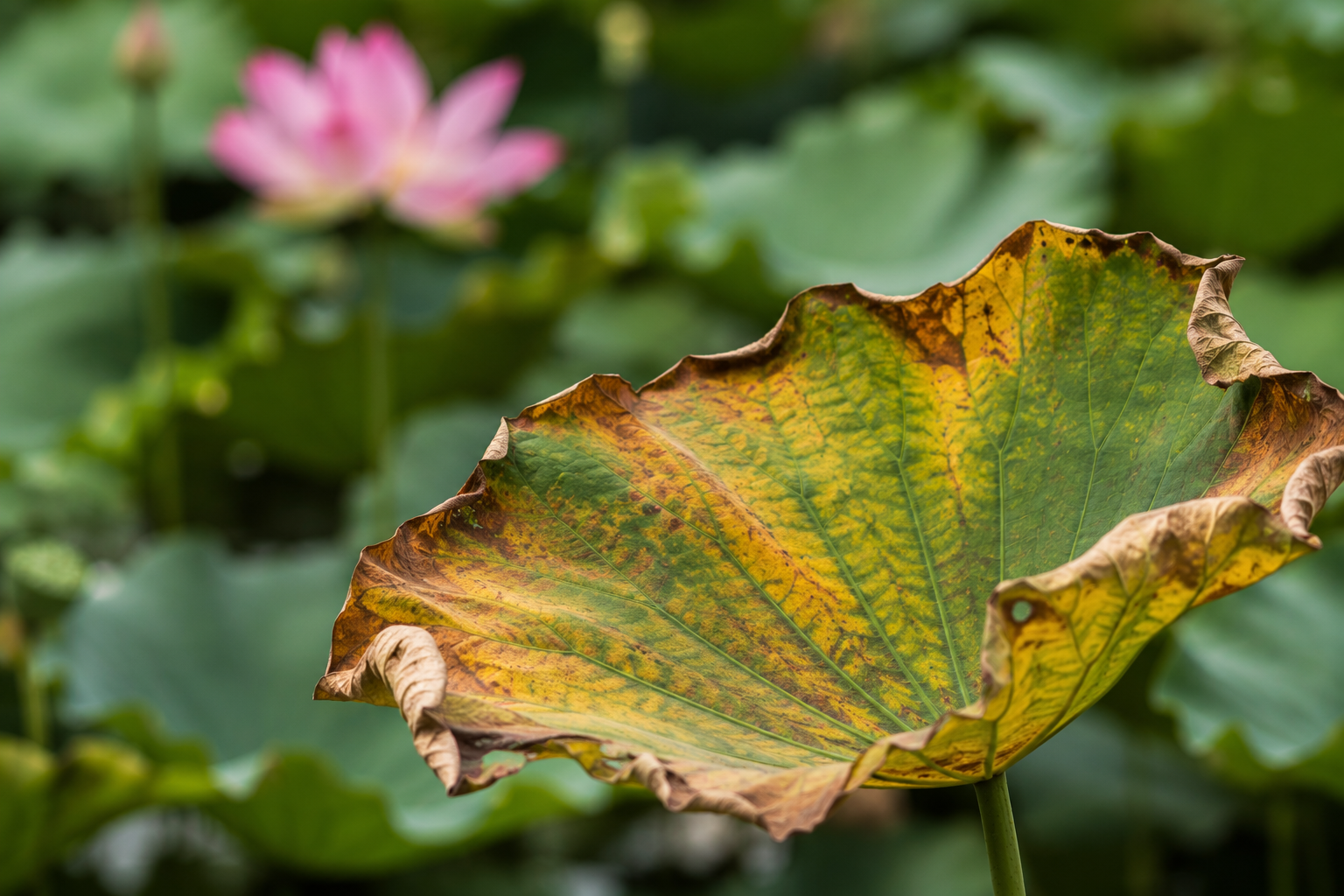
Lotus offers an especially beautiful example.
We might naturally be drawn to the magnificent lotus flower at its peak. But the life of the lotus doesn't stop there.
As summer progresses, blossoms scatter and leaves begin to show the effects of the season. Some leaves remain strong and upright while others reveal signs of decline. The August Sōka draws attention specifically to this changing appearance of lotus after Obon and to the fleeting beauty found in that stage of the plant's life.
For the ikebana arranger, these aren't necessarily defects to eliminate.
They are characteristics to observe.
A pristine young leaf and an aging leaf don't say the same thing. Neither does a bud, an open flower, or the form that remains after flowering. Each represents a different moment in the life of the plant.
Choosing among them becomes part of what the arranger wants to express.
Even the same plant can have a very different character as the year progresses.
The August Sōka considers reeds as they move from summer toward autumn. Their appearance changes, but so does the feeling they convey. The arranger is encouraged to notice qualities such as the lightness of the leaves and the movement created by the breeze. The goal isn't merely to make an arrangement that says, "These are reeds." It is to observe what the reeds are doing now and find a way to express that character.

That's an important distinction.
An ikebana arrangement can do more than identify a season through familiar flowers. It can capture a moment within that season.
Early summer doesn't feel like late summer. Early autumn doesn't feel like the weeks just before winter. Nature is constantly changing, even when the name we give the season stays the same.
This way of seeing can take some practice.
When selecting materials for an arrangement, our first impulse may be to search for the most flawless specimens. Certainly, damaged or unhealthy material isn't automatically desirable simply because it is imperfect.
But "imperfect" and "expressive" aren't opposites.
Before automatically removing a changing leaf, an unusual curve, a fading blossom, or another sign of the plant's natural development, take a moment to look at it.
What does it tell you?
Does it reveal the season?
Does it show how the plant grew?
Does its color, texture, or line add something that a more perfect specimen would not?
Most importantly, does it help you express what you saw in nature?
Sometimes the answer will be no, and out it goes.
But sometimes that will be the most interesting material in the arrangement.
Perhaps that's one reason working with living plant materials can remain fascinating for a lifetime.
Flowers don't stay at full bloom. Leaves don't remain flawless and green. Branches grow, bend, weather, and change. One season quietly gives way to another.
Ikebana doesn't ask nature to stop at its most conventionally beautiful moment.
It gives us a reason to pay attention to what happens next.
And sometimes, when we look carefully, we discover that beauty didn't disappear when the petals began to fall.
It simply changed.
The Realistic Landscape arrangement below is one of my own, using reeds and other late-summer materials. It offers an example of how we can observe plants as they are in a particular moment and use ikebana to express the character of the season.
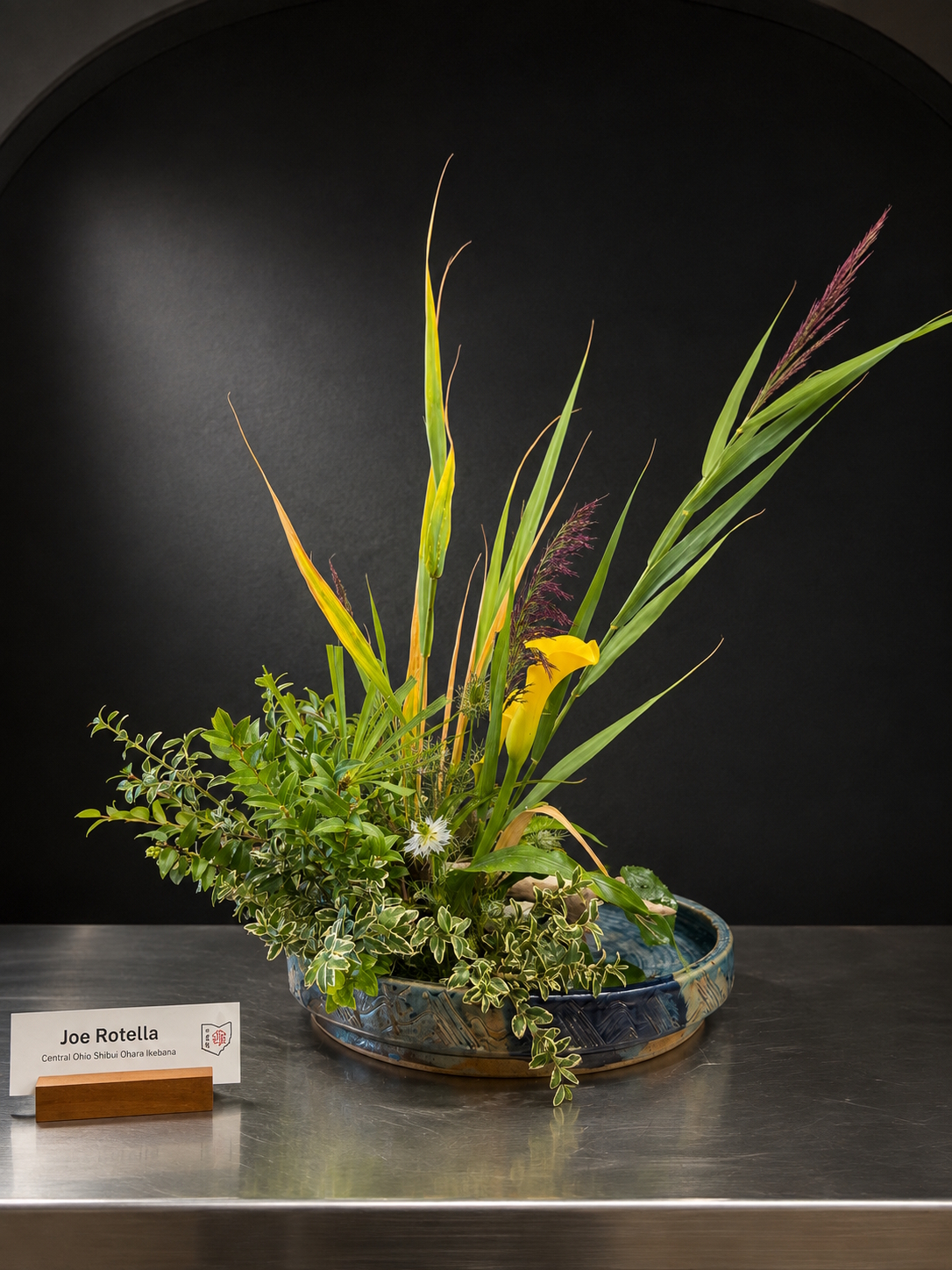
Joe Rotella
Associate Second Term Master
Ohara School of Ikebana
Whether you live in Central Ohio or across the world, you can be part of our Ohara ikebana community. Annual membership is just $24 and includes four online lectures each year (a $60 value), available live or on demand.
Become a Member →Near Columbus? Join us in person for beginner-friendly Ohara ikebana classes.
View Columbus Classes →


